AWS launches gated Amazon Polly voice cloning with customer-held consent
The service creates account-bound synthetic voices from minutes of audio, while AWS requires customers to verify permission for every creation.
Ledger: AdoptedAI is taken up
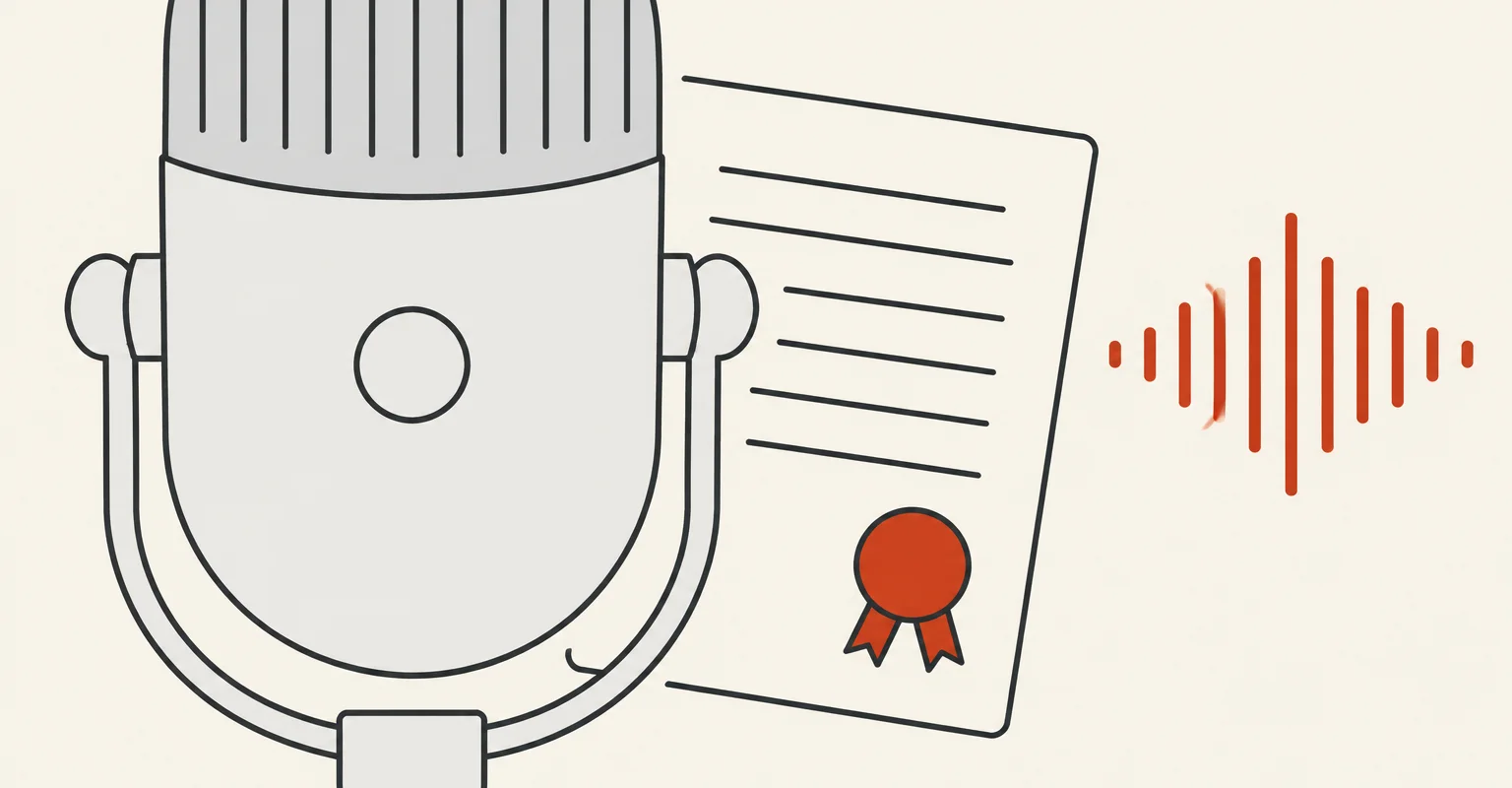
Amazon Web Services has made voice cloning generally available in Amazon Polly through a gated release, allowing approved customers to create a synthetic voice from a few minutes of recordings of one speaker. The service launched Nov. 19 and initially supports English, Spanish, German, French, Italian, Portuguese and Hindi.
The feature makes the customer responsible for obtaining consent. For every voice creation, customers must confirm that they hold all legally required permissions to create and use the voice and that their intended use is lawful and appropriate. AWS’s responsible-AI guidance prohibits cloning where required consent is absent, including voices of people who cannot legally consent, such as minors.
The request includes a TermsAccepted=True field that represents the customer’s confirmation of consent, according to Voice Over Herald. AWS recommends retaining a record of each speaker’s consent, deleting the voice if that consent is withdrawn, disclosing synthetic speech where appropriate and restricting access to necessary users and systems.
Access is being enabled account by account. Some Amazon Polly customers already have it, while other customers can apply or contact their AWS account team. The feature is available in Regions supported by Polly’s generative engine, including AWS GovCloud (US), and each account begins with a quota of 10 cloned voices per Region.
A cloned voice is limited to the AWS account and Region in which it was made. Using it in another account or Region requires creating it again from the same recordings, with consent covering every copy. AWS says the voices are encrypted and access-controlled, while Polly does not retain the original recordings after voice creation or use them to train its models.
Customers can upload as many as 10 recordings through the AWS console, with each file limited to 5 MB. Unite.AI reported that submissions can contain one to 10 recordings with up to 15 minutes of single-speaker audio in total. Voice creation is asynchronous and can take several minutes before a voice becomes active; the CreateVoice and DeleteVoice operations share a limit of one request per second.
The voices run only on Polly’s generative engine and speak only the language used in their source recordings. AWS says the engine offers naturalness and accuracy comparable with its other generative voices. But cloning also preserves characteristics of the recording, such as background noise, room echo and meeting-app audio processing. Music, multiple speakers, quiet or very short recordings can reduce similarity, and AWS advises customers to listen to a cloned voice before deployment.
Amazon Polly watermarks text-to-speech audio made with generative voices, including cloned ones. The company cautions that heavy editing, mixing or very low-bit-rate re-encoding can weaken the watermark. Deleting a cloned voice removes its voice data immediately.
Building a cloned voice is free, while speech synthesized with it is charged on a pay-as-you-go basis. AWS presented the tool for uses including IVR systems, contact centres, voice agents, mobile apps, advertising, in-store announcements and connected devices, as well as audiobooks, courses, podcasts, videos and game characters. AWS can disable cloned voices that breach its terms, and says concerns about a cloned voice can be reported to the company.
- Medium Voice and audio
- Company Amazon