“Raphael” brings Korea’s first all-generative-AI feature to cinemas
The Nov. 25 release pairs polished AI visuals with a familiar android-redemption story, according to a Korea Times review.
Ledger: AdoptedAI is taken up
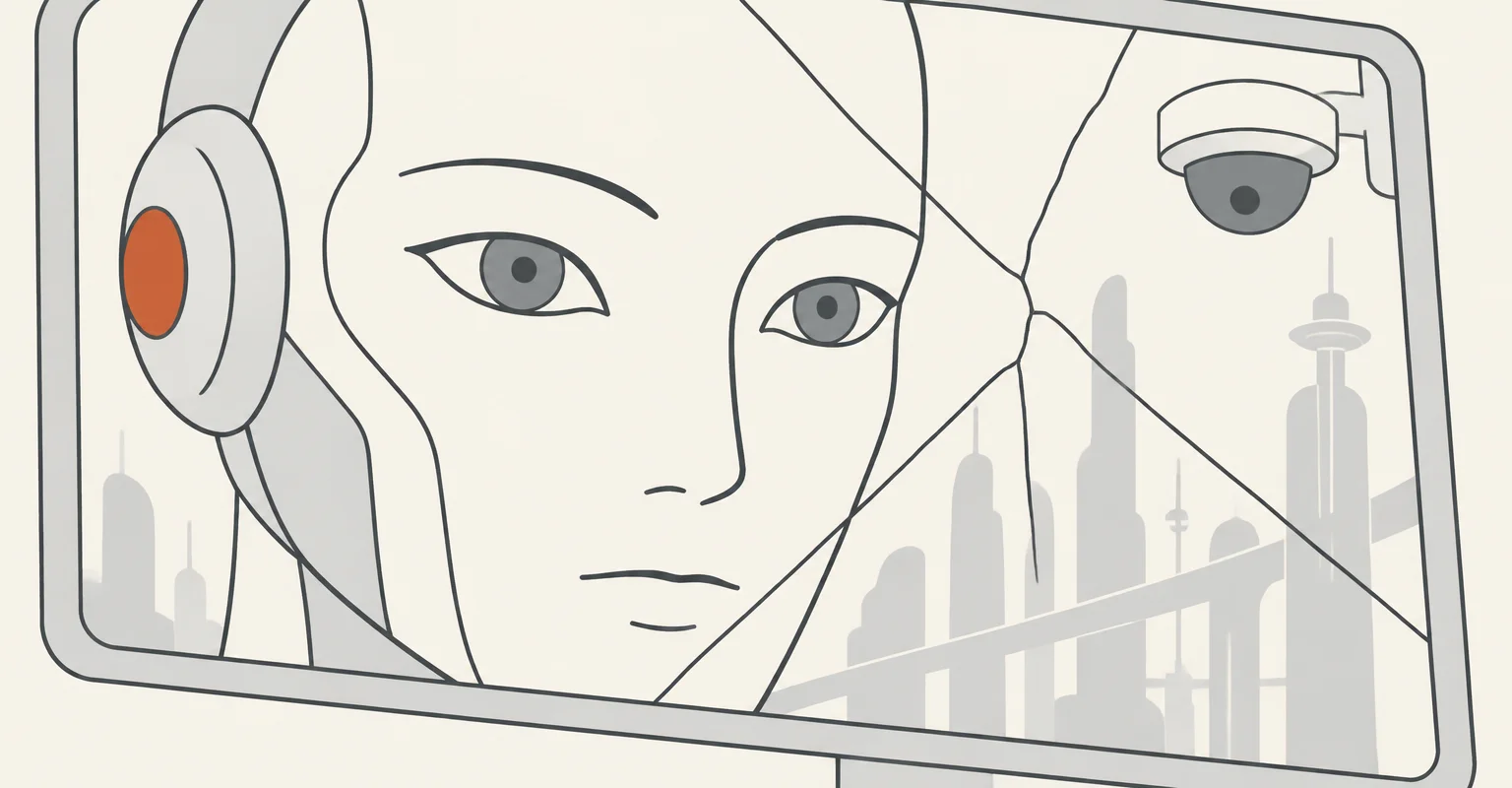
“Raphael,” described as Korea’s first feature-length film made entirely with generative AI, is due to open in local cinemas on Nov. 25. The 138-minute science-fiction film was completed over 14 months without shooting scenes with real actors, and uses generative systems across planning, screenwriting, character design, landscapes, voices, music and sound effects.
The film was co-directed by Yang Ik-june, Moon Shin-woo and Jung Joo-won, and produced by Matteo AI Studio and MBC C&I AI Contents Lab. eDaily reported the planned Nov. 25 Lotte Cinema release in October.
Set in the 2050s, after climate disasters and wars have brought down civilisation, “Raphael” takes place in the virtual city of Delmore, where unregistered citizens can be executed immediately. Its android protagonist, Alexei, meets Sophia, an unregistered girl, and Michael, described as humanity’s last priest. As Alexei develops human feelings, the story asks whether an android can have a soul and enter heaven.
The Korea Times review found the visuals unusually polished for an AI production, saying they avoided the changing faces and other awkward errors common in AI video. It also judged the dialogue delivery and lip movements smoother than in earlier AI films. But the review said the plot, in which a combat android finds humanity and freedom through people around him, drew too heavily on familiar science-fiction ideas.
The film’s stated status as entirely AI-generated needs a qualification. AI Films Studio says the description refers to visual construction rather than live-action photography or conventional animation. Yang, speaking at a Cannes Marché du Film panel in May, said the production team numbered seven, compared with an estimated 150 to 300 people and as much as $2 million for a comparable live-action production. He said AI was a prerequisite for his first theatrical feature, not simply a creative preference.
Yang said the team used Midjourney, Stable Diffusion and Runway Gen3 in development, with Kling AI used in production. He credited Kling’s native 4K output with making a theatrical release viable. “Raphael” was presented at Hong Kong FilMart in March as one of the world’s first entirely AI-generated features and later appeared at the Cannes Film Market as a Kling AI case study.
The reported running time is not consistent across accounts: the Korea Times lists 138 minutes, while AI Films Studio describes an 80-minute version. The release arrives as Korean AI cinema advances from shorter experiments. As we reported in October, “Steelay” used generative tools throughout its production but retained human editors, actors and sound specialists in its final form.
The wider shift has raised unresolved questions over copyright, likeness rights and protections for human creators. The Korea Copyright Commission has said generative-AI video can qualify for copyright protection where there is sufficient human creative contribution, while industry figures have warned that rights questions surrounding video remain particularly difficult to settle.
- Medium Film and TV