“Steelay” pushes Korean AI filmmaking to 90 minutes
The new science-fiction feature relied on generative tools throughout, but human editors, actors and sound specialists shaped its final form.
Ledger: AdoptedAI is taken up
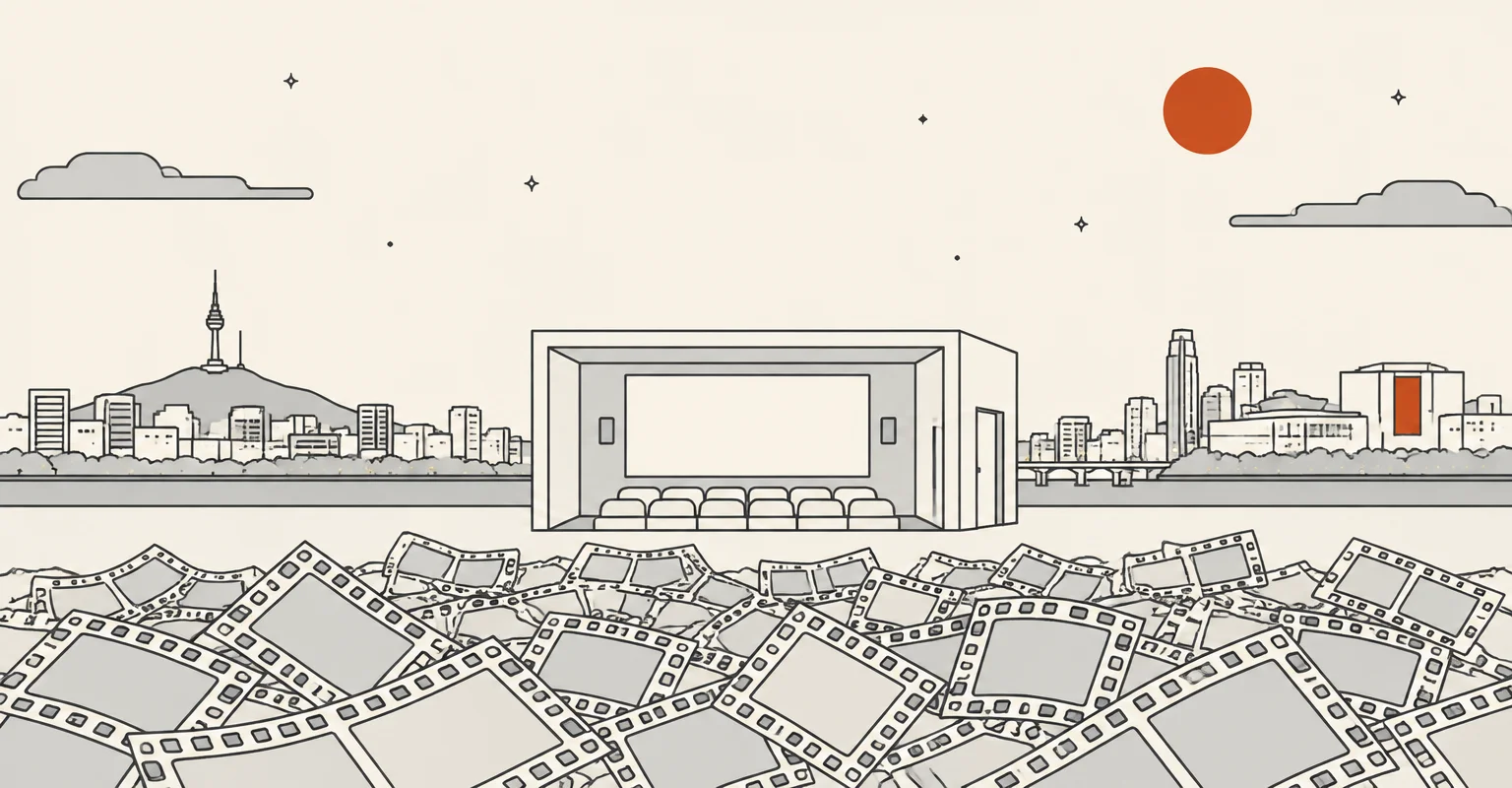
“Steelay,” a 90-minute science-fiction action film made with artificial-intelligence tools throughout its production, opened in South Korean cinemas on Oct. 21. The Korea Times described it as the country’s longest AI feature film to date, placing it 30 minutes ahead of the AI films “I’m Popo” and “Man in Hanbok.”
The film follows Yoon Kang, who uses a combat suit left by his father and joins the AI Ara against a virus and AIRA, an autonomous robot that comes to regard humans as threats. Its premise draws on contemporary debate over agentic AI systems that make decisions without human command.
Laon Company Plus made the film in six months for under 1 billion won, or about $750,000. The film was described as a fully AI-made feature directed by Seol Woo-in and Lee Han-wook, while the production team said it used no conventional computer-generated shots.
Much of the budget, an estimated 500 million to 600 million won, went on generative-AI tools. The team faced shifting costs, credits, licensing policies and software updates from overseas services during production. A better generation tool emerged when the project was about 90% complete.
The technical process still required substantial human selection and finishing. Individual shots ran for up to about 15 seconds, and the filmmakers assembled 13,000 generated outputs into the feature, according to Maeil Business Newspaper. The Korea Times reported that the team also chose final scenes from roughly 13,000 rejected options, with human judgment determining the final cuts.
Human voice actors dubbed the film to avoid the unnatural sound associated with AI-generated speech. The filmmakers also used lip-syncing, professional dubbing, sound mixing and digital-intermediate work to complete it. Ham Seul-gi said the core difficulty was building a narrative capable of sustaining a 90-minute running time, rather than simply generating individual clips.
Seol had previously directed “Code G,” a collection of five AI shorts. He said the tools were secondary to characters, story, action and emotional impact. Actor Kang Tae-kyung, who played Ara and an agent and used his own face in the film, similarly argued that AI could be a creative tool without replacing actors.
“Steelay” arrives as Korean filmmakers and producers increasingly use AI video systems as they improve in character continuity and cinematic expression. The Korea JoongAng Daily reported that the maximum length of generative-video clips has risen from under 15 seconds to as long as 30 seconds, while some systems can accept as many as 50 references for a generation. The industry estimates that AI can cut visual-effects costs by 40% to 60% on average.
The growth of AI filmmaking has also sharpened questions about copyright, likeness rights and safeguards for human creators. The production team said it had studied the appearances and trends of various people, including recent idols, in character creation, and cautioned that portrait and copyright rights require care because relevant rules remain insufficiently established.
The Korea Copyright Commission has said generative-AI video may receive copyright protection where there is sufficient human creative contribution. But Korea still lacks clear standards for cases in which AI-generated work infringes another person’s rights, while the country has no domestic generative-video model regarded as competitive with leading foreign systems.
- Medium Film and TV