Mikami and Kim split over AI’s role in game development
Both developers use AI, but each said human creators must retain control of a game’s design and identity.
Ledger: DisputedNo outcome yet
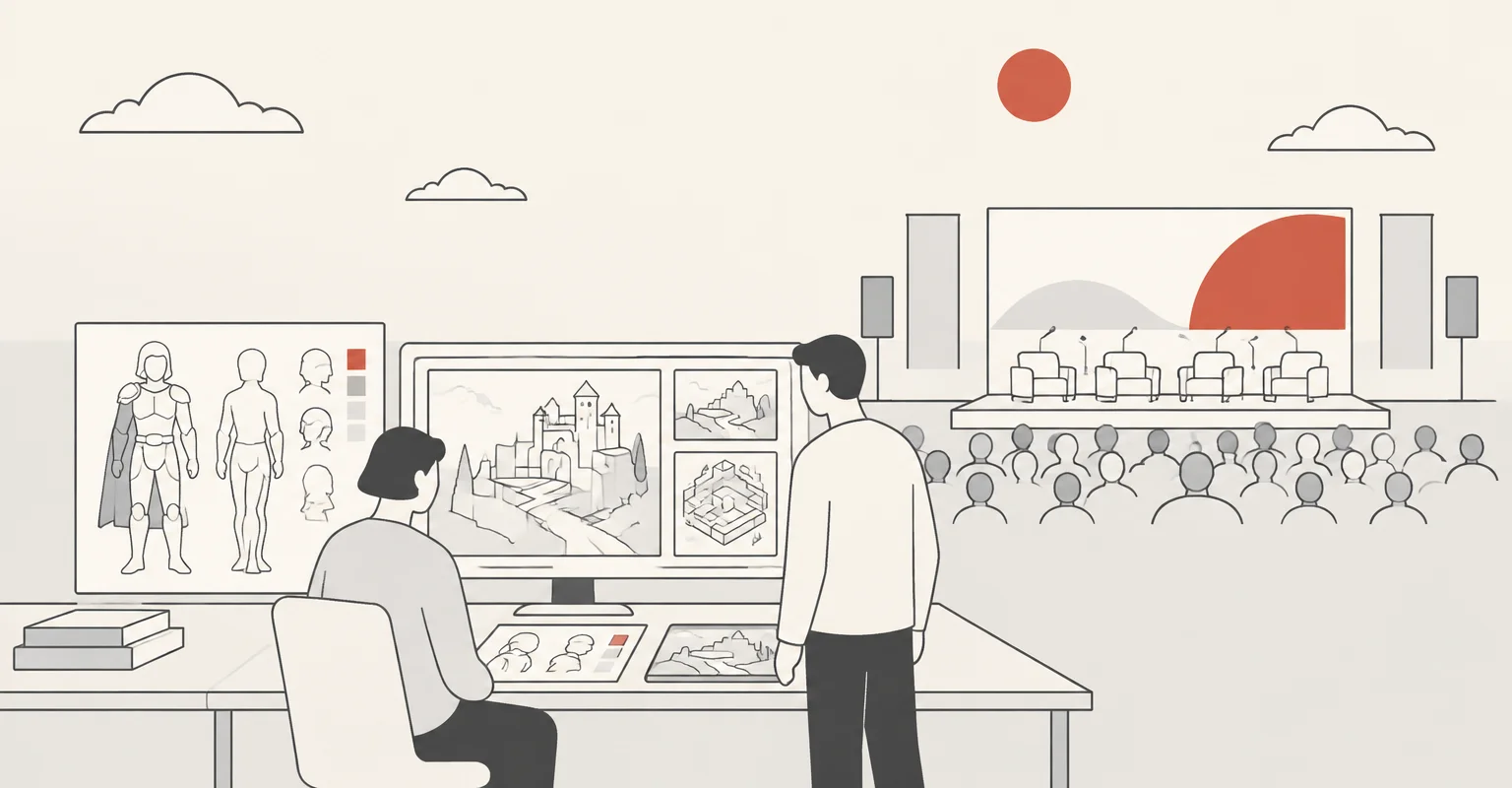
Shinji Mikami and Hyung-Tae Kim set out sharply different views of artificial intelligence at G-CON 2026 in South Korea, even as both described using it in game production. Kim said development without AI was no longer feasible, while Mikami said he sometimes wished the technology would disappear from games and the wider world.
The Nov. 19-20 panel showed the disagreement was more about the extent and purpose of AI use than a simple choice between adoption and rejection. Kim said AI was already improving programming, quality assurance, code review and debugging. Mikami said it could raise quality without increasing a project’s budget, but warned that developers could lose jobs to AI within five to 10 years.
Inven Global reported that Mikami uses AI to turn 2D art into a 3D preview before modelers start final work. The process takes about 20 minutes, compared with nearly a month that could previously be spent building a model before discovering it conflicted with the original 2D design. Mikami said core development remained human-led and that design was not handed to AI.
Kim made a similar distinction at Shift Up. He said the company uses AI to assist work including character, map and level design, mechanics and systems, while humans retain creative control. The studio does not use AI for story writing, he said, because generated prose has a recognisably artificial tone.
Shift Up’s stated approach is “handmade from start to finish”: people establish the foundation, AI handles intermediate tasks and human artists refine the result before it goes into a game. Such tasks include testing lighting variations, weathering textures and reducing polygon counts. The company also uses AI in concept iteration, rendering hand-drawn monster sketches photorealistically before artists draw selected details back onto them.
Kim said the aim was to push quality beyond normal limits rather than cut costs or accelerate output. He cautioned that efficiency alone did not make a game appealing, and argued that excessive dependence on AI could erase distinctive qualities. If everybody used tools with what he called a single creative style, the results could become alike; he said many generative-AI indie games already appeared to have been made by the same person.
Following fan backlash to Shift Up’s AI-generated promotional video for “Stellar Blade: Blood Rain,” released July 21 and featuring protagonist Evie, the company adopted its handmade-from-start-to-finish approach. Kim said the response taught him how strongly the human touch affects users’ reactions.
Kim nevertheless predicted that AI-generated games would flood the market by 2027, while handmade games would become more valued in the AI era.
- Medium Games