Australian artists urge councils to regulate AI after Brisbane mural backlash
NAVA says temporary public art should still be commissioned from human artists, not generated from an administrator’s prompt.
Ledger: DisputedNo outcome yet
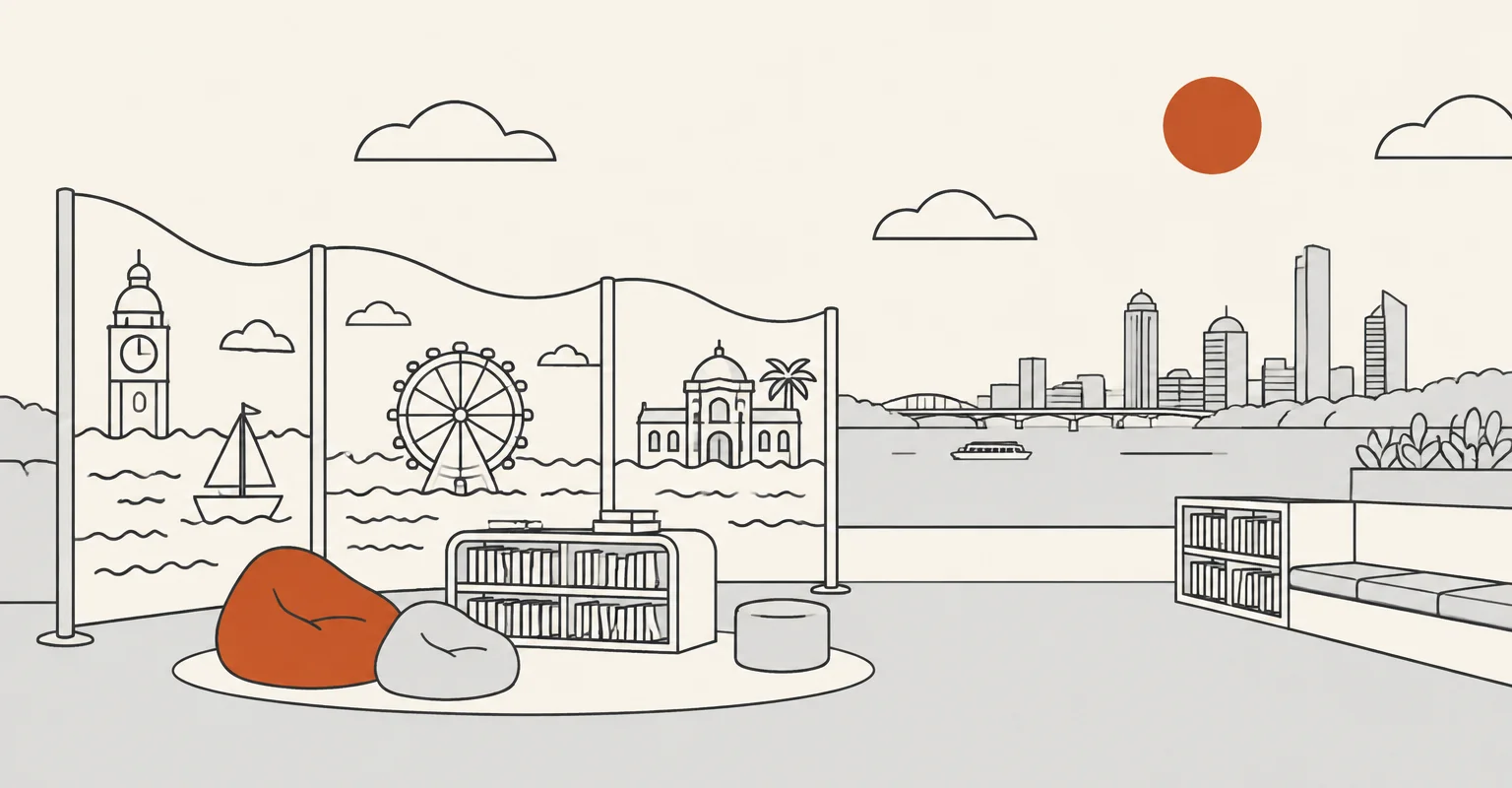
Australia’s National Association for the Visual Arts has called on councils to regulate the use of generative AI in public installations, after an error-filled mural at Brisbane’s Bulimba Library drew widespread condemnation. The group said human artists should lead public-art projects, while Brisbane City Council said the illustration would be replaced once it could commission a local artist.
As reported here last week, the council had described the work in the library’s children’s reading nook as temporary while permanent-art plans were finalised. The nautical-themed panels, beneath a sign reading “All Aboard: Brisbane River Reading Ferry”, depicted Brisbane’s central business district but included a three-winged cockatoo, a seagull with a cockatoo-like beak, illegible writing on a CityCat and landmarks placed on the wrong side of the river.
Penelope Benton, NAVA’s executive director, said AI in public art “absolutely” needed regulation. She urged local governments to incorporate a framework now being developed by NAVA into their art-commissioning policies, and said a human artist should be engaged to make and direct the work rather than an administrator entering a prompt.
Benton said she was not seeking to forbid AI outright, because artists themselves were experimenting with it. But she argued that its use must respect human creativity, artists’ livelihoods and copyright. “Public art is work, and artists should be paid to do it,” she said, adding that a council unable to pay an artist should not install a mural. She also rejected the idea that a temporary installation excused bypassing professional artists, saying temporary work could be commissioned.
The mural was installed in a children’s reading space. Sophie Beer, an artist, called it “AI slop”. Simon Degroot, programme director for Griffith University’s bachelor of visual arts, described it as bland and “a very one-dimensional prompt outcome”, arguing that inaccuracies were particularly troubling in a setting meant to foster imagination.
NAVA supports the “Not AI’s to Take” campaign and says artists should decide whether their work is used for AI training, with informed consent and agreed payment. In a 2025 survey of more than 890 visual artists, more than 80% said AI posed risks to their income, practice or moral rights, while 73% supported compensation for use of creative work in training.
Creative Australia has separately developed principles intended to guide generative AI use in creative output and promote an industry centred on human creativity. The Australian government has ruled out a text-and-data-mining exception to copyright law, although it is considering other AI-related changes to the Copyright Act.
- Medium Art and design